
Blog

We Wish you a Merry Lockdown and a Frugal New Year

How to enjoy Christmas on a small budget and no relatives round. With some imagination and a little organisation, you can have a festive Christmas.

We claim Christmas is about religion, children, family and being charitable. In reality, Christmas has become about, expensive presents, feasts and heavy drinking.

This year, many people won’t have as much money as they normally do, or they’ll be worried about spending in case they lose their job in the new year. So perhaps this is the reset we all needed – even if we didn’t realise we needed it.

  1. Father Christmas doesn’t buy tonnes of huge presents to put under the Christmas tree – come on, be realistic, he couldn’t fit them all on his sledge. He fills one stocking (a sock, not something you could fit a small elephant in) with cheap little presents: comic, pack of cards, chocolate bar, multi-bic, cheap nail varnish, orange, walnut, bath bomb, sticky goo, etc.
  2. YOU buy the bigger presents that go under the tree. Then not only do you get the credit and your children learn to appreciate you instead of the big guy getting all the credit, but in the case of a family financial crisis, the children don’t think Father Christmas is cross with them this year.
  3. Instead of pictures of your child next to a ridiculously large pile of presents, post a picture of your child’s grinning, chocolate smeared face, appreciating the presents regardless of value. We have to stop competing with money and enjoy the moment instead.
  4. All those nights you would have been out partying? Sit together as a family with your children and make your own Christmas cards and presents for the closest family members. I know I appreciate my grandchildren’s hideous drawings of me and their clumsy attempts at creating bookmarks, because I know that they loved making them and they were thinking of me when they made them. I’d rather have a badly decorated £2 flowerpot than some £50 designer pot every time.
  5. The Christmas meal. Why do we go so over the top? We can never eat it all and even with turkey soups and turkey curries for days after, most of it still goes in the bin. So, let’s just make a Sunday dinner and add stuffing, cranberry sauce and a cracker. (A Christmas cracker – although if you want to have a cheese cracker with your Christmas dinner that’s your choice!)

Now what really contributes to the Christmas fun, is squeezing 101 family members around the tiny kitchen table. Unfortunately, we can’t do that this year, but that doesn’t mean we can’t still interact. There’s plenty of time to learn how to use Zoom (I’m sure other brands are available). And it’s free. So here are half a dozen great family-friendly, Zoom-friendly, Christmas party games to start you off:

Charades: This is a mime game. If ever a game translated to Zoom, this was it!
Rules: Whoever wants to host goes first. They think of the title of a book, play or film and mime which it is. If it’s a book they mime opening a book, if it’s a film they mime holding an old fashioned TV camera with one hand whilst winding with the other hand, if it’s a play they draw the shape of the opening curtains. Then they hold the amount of fingers up for the amount of words in the title. Once everyone has shouted out the amount of words, they then hold up the finger to show which word they are going to mime first, so if they’re starting with the second word they hold up two fingers. To show how many syllables the word has they tap that amount of fingers on their arm. They can also mime one syllable at a time if they like by tapping which syllable on their arm. After that, when everyone knows whether it’s a book, film or play, how many words it has, which word they’re miming, how many syllables it has and which syllable they’re miming (if they chose to split the syllables up) they, mime that word (or part word). If someone get’s it right the mimer normally touches their nose and points to the person who got it right, but for Zoom, they’ll just need to shout the person’s name who got it right. When someone eventually guesses the full title, they win and it is their turn to be the mimer.

Bingo: (It’s a good idea to warn everyone to prepare this the day before). Everyone needs a pen and paper. They make a grid of 2 down by 8 across. They put in 16 different numbers between 1 and 99 of their choice. At the beginning of the game, everyone must hold up their card so everyone can see it – this avoids the temptation to have a blank card and write the numbers in as they’re called. Maybe you’ll trust your family? Maybe not! The host uses any random number generator site and shares their screen so everyone can see it. They can also have great fun giving the full Bingo calls: Legs Eleven, two little ducks Twenty Two, etcetera. You can have prizes for a line and prizes for a full house.

Quiz: (This definitely needs to be prepared in advance by whoever wants to host the game). Make sure there are questions that each generation can do well in, for example a nursery rhyme round for very young children, social media questions for teenagers and for the oldies perhaps music questions that relate to their youth. When it comes to the answers, be generous with close answers 😊 You can style your quiz however you like, but here are some ideas:
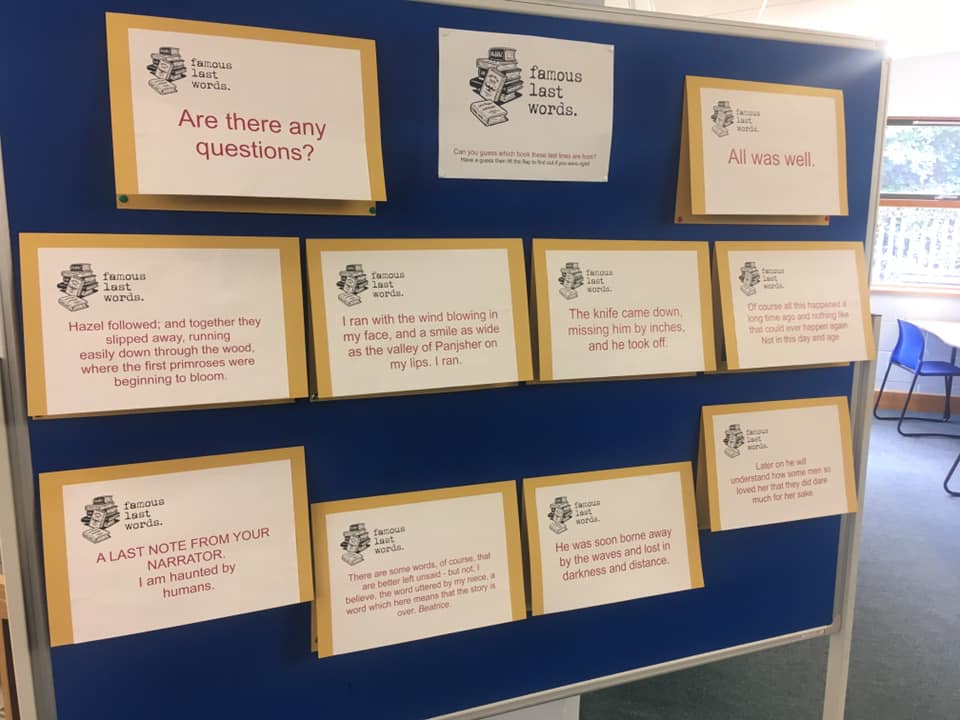
Books category: the opening lines from famous books (Amazon’s look-inside feature will help you here).
Music category: Name that song (just play a small section) or guess the year that … song was No1 in the charts, etc. (Make sure you have a broad mix so every generation has a chance to win.)
History category: Dates of coronations or wars or how long a war lasted. For example, do you know how long the One Hundred Day War really lasted? (I’ll give you a clue – it wasn’t 100 days!)
Geography category: What is the capital city of… or name a country that has a live volcano, or questions around rivers, etcetera.
Animal category: What is the collective noun for… What is a baby … called? Name an animal beginning with the letter …
Personal category: you can have some great fun with this. Questions such as “which family member did a cartwheel whist eating popcorn and had to go to A&E go get it removed from their nose?” (That was my daughter by the way!) Keep it fun and light – don’t shame or humiliate anyone.

Silliest Face: No explanation needed! The children will be brilliant at this, but watch out for those weird aunties!

Fastest Finger First: A quick fire round of questions. (Prep needed.) The game host asks a question and the contestants type the answer into the chat. Whoever answers correctly first wins. These are usually general knowledge questions. The host should be aware of the age and ability of the contestants.

Truth, Truth, Lie: Again, let people plan in advance. Each person takes turns telling two truths and one lie about themselves. The contestants guess which is the lie and type A B or C into the chat. One point to each correct guess.

Organising:
Plan your Zoom games in advance, not only will the fun run more smoothly, but it will add a bit of excitement to the days leading up to Christmas day too. Share out the hosting by allocating a different game for each household to host. Make sure everyone knows how to use Zoom and has their wifi sorted – the silver surfers might need some over the phone instruction.

Prizes:
As you cannot hand out a physical prize, they can take the form of promises instead, such as a hot chocolate with the full works at your local café when you’re allowed out, or the host of each competition can send a certificate to the winner in the post. It’s all up to you. The main thing is, you will have had fun with your family on Christmas day! 😊

Blog

Secondary School Display Boards

How to create displays that encourage a positive learning environment, give children pride in their work, help them remember key information, and encourage them to think for themselves.  Instead of those ones that, you know, end up ripped and neglected.

Lexicology of Harry Potter by Rachel Wilkinson, Nunthorpe Academy

Let’s face it, displays take a lot of time and effort. Can you really be bothered making a new one after 5 lessons of 30 challenging children, just for people to ignore it or treat it like wallpaper? Sometimes you wonder if it is worth it.

Well yes, it is worth the effort. When done properly, displays can make a positive impact on teaching and learning. (Or without the jargon – the kids will actually gain something from it!)

First of all, let’s consider what we want the display to achieve:

What do YOU want from your display?

The display must serve a purpose. Yes I know, making it look pretty makes you feel proud of your work, but it also needs to be functional. Think carefully about what you wish to achieve. What is it specifically that you want to teach/remind/evoke?

LAST 10 LINES INTERACTIVE by Jenine Davey, Tendring Technology College, Essex

What do your STUDENTS want from your display?

They want the room to look nice – everybody works better in a nice environment, and they want to be able to glance up for easy reminders. For example the name of a six-sided shape or quotes from Romeo and Juliet. A word of caution. If you have “answers” constantly on display, children can quickly become lazy. Don’t have the Periodic Table up all year round, or they’ll never need to learn it. You could have it up for a few weeks while they’re learning it, then remove a few answers at a time – perhaps replace with clues.

DICKENS LONDON by Debra Perrin, Oathall community College

What does your SCHOOL want from your display?

Your school will have specific criteria which may well be set out in a policy, for example all our displays must be either laminated or behind Perspex, another school I worked at, everything had to be double-mounted. Even if your school is really regimented, you can still have fun.

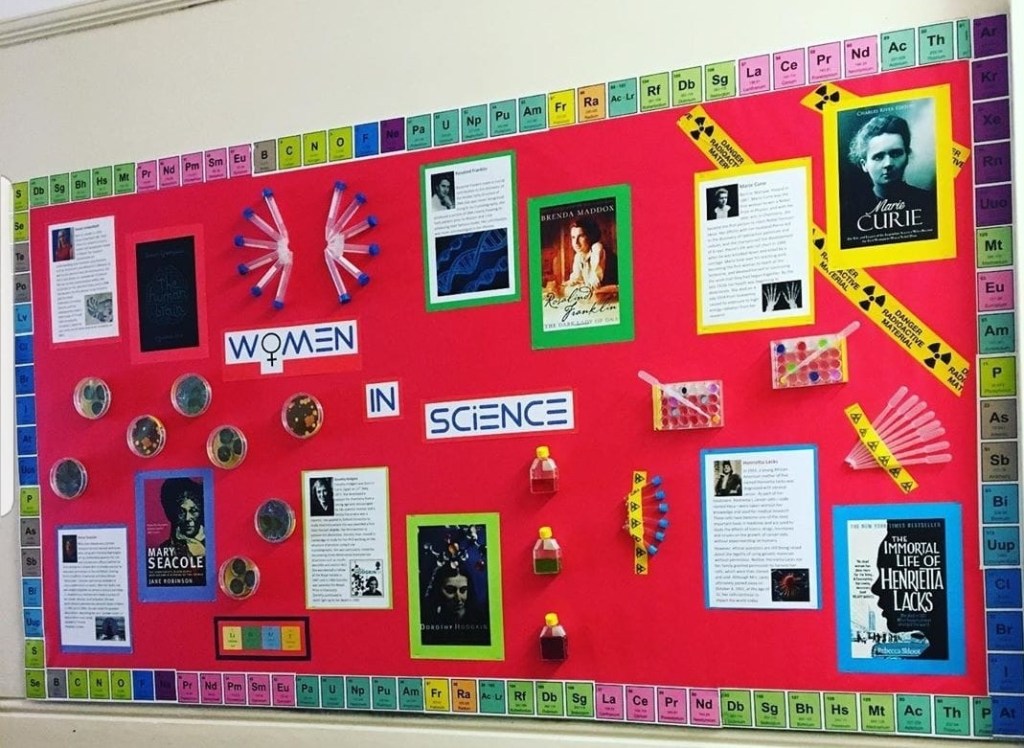
WOMEN IN SCIENCE by SG

What does OFSTED want from your display?

Inform, educate, engage. SMSCBV (social, moral, spiritual, cultural, British values). Stimulating learning environment.  Evidence of progress (show the best work of all students, not just the best work of the highest achieving students) Ofsted, in my opinion, has two favourite things – literacy across the curriculum and pupil progress. These can both be shown in displays.

BLACKOUT POETRY 1 & 2 by Karen Conlon, Palmers Green High School
AR STARS by MH

How do you help students RELATE?

Look around your school. How many displays are filled with middle-class, middle-aged white men? Not that there’s anything wrong with middle-class, middle-aged white men of course, it’s just that there’s also a whole myriad of other wonderful people out there. Children need to see people like them to relate, so make sure your display is inclusive: rich and poor, male and female, black and white, disabled and able-bodied, Earthling and Martian…

FIND YOURSELF IN THE LIBRARY by Helen Pixie Jessop Castle Rushen High School

What makes a display ATTRACTIVE?

Ahh, now this is subjective. If we all liked the same thing, we would all have a Labrador and no other dogs would exist (imho). The reason we’re making the display attractive is to grab the students’ attention in the first place. So start with thinking about the colour palette. Not just for the aesthetics but also for the colour connotations, for example red can symbolise love and passion or hate and anger. The colour can also have an effect on the dynamics in a room. Strong bright colours can be stimulating whereas pastel shades can be calming. Make sure the colours stand out against each other (without clashing). Don’t try to cut corners, the finishing touches make the most dramatic differences. Use backing paper, borders, double mount. Try to use different textures. Preferably make it 3D. If possible, make it interactive – the students might need to lift a flap, or if they can’t be trusted to touch or it’s behind perspex, questions could be posed. Then have some fun. Sprinkle stars or balloons or whatever floats your boat.

PROUD by Miss E O’Brien, Arden Academy

How do you stop your display becoming wallpaper?

So your display was commented on by teachers and students alike! Hurray! You were buzzing about it for two whole weeks, then you forgot about it. And so did the students. To prevent a display becoming wallpaper, it’s a good idea to have parts of it that change regularly. From the picture below, you can see that the birthdays are changed monthly and the literacy focus is changed weekly. Additionally, the students have to lift the sheet of paper to discover the answer.

INTERACTIVE by Rachel Wilkinson, Nunthorpe Academy

Where should your display be positioned? 

Displays which motivate students can be powerful, past students’ exam results and success, significant female scientists, or people who have started with nothing and been successful from sheer hard work. The problem is that once these have been seen, they do quickly become wallpaper as students have no reason to read them more than once, so they’re great for entrances, exits, corridors, but not necessarily classrooms. The displays in the classrooms should be the ones the students need to refer to, to aid their learning. One thing that is hard to resist is filling the whole walls with displays, posters and work. Less is more. Really – less is more. If you choose ice-cream and squirt strawberry sauce and toffee sauce and chocolate sauce and sprinkle with chocolate drops and hundreds and thousands and smarties … you’re going to be sick. White space is calming and necessary – especially to children with ADHD or autism. And nobody wants that ugly mess left behind from blutac and staples in the wall – admit it – you’ve seen it. Don’t let it happen in your classroom!

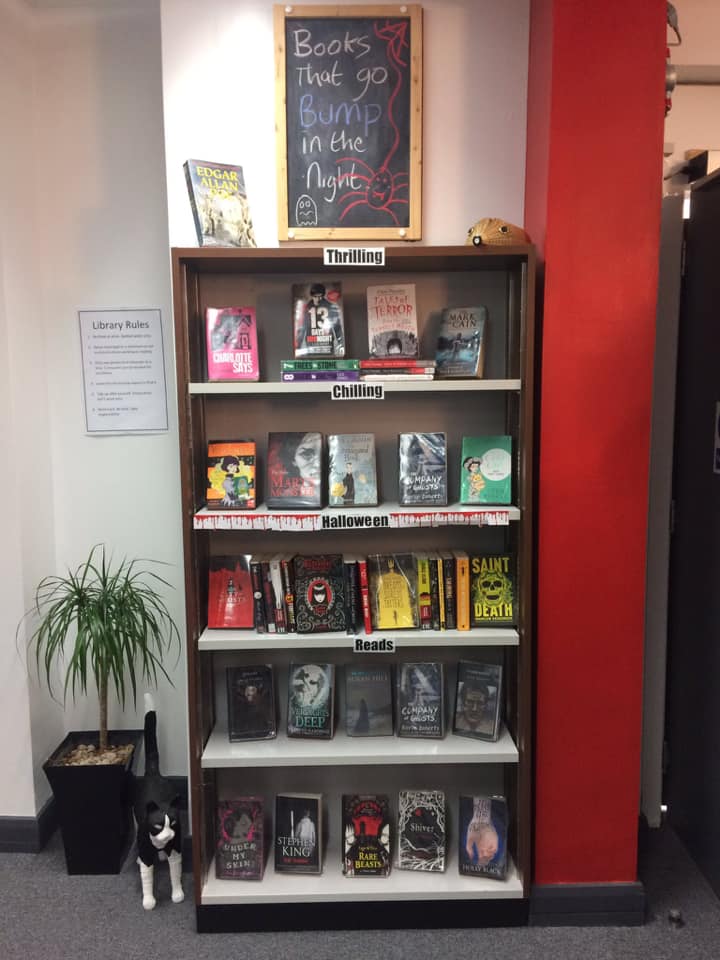
Hallowe’en Bookcase by RW

How do you maintain the displays?

A lot of people will see your display – the students, their parents, your colleagues, SLT, OFSTED, other visitors. No pressure! Rightly or wrongly, people will form part of their impression of you by your display, so make sure it isn’t out of date, scruffy, half empty, or boring! Involve the students in the displays, so they become invested in the space. vandalism encourages vandalism and tidiness encourages tidiness, so if you see anything untoward happening to your display, make sure you fix it immediately, or you may have a helpful student who would love to maintain and update the displays for you.

BLOOMING BOOKS by SL

So there you have it. Lots of great ideas for your displays. Keep in mind they need to be relevant and functional, but also fun and attractive. Enjoy being creative 😊

Huge thanks to members of the Facebook group, “Secondary School Librarians” who shared ideas and pictures of their displays for me to use here.

Blog

Why have millions of us spent Lockdown walking through the countryside?

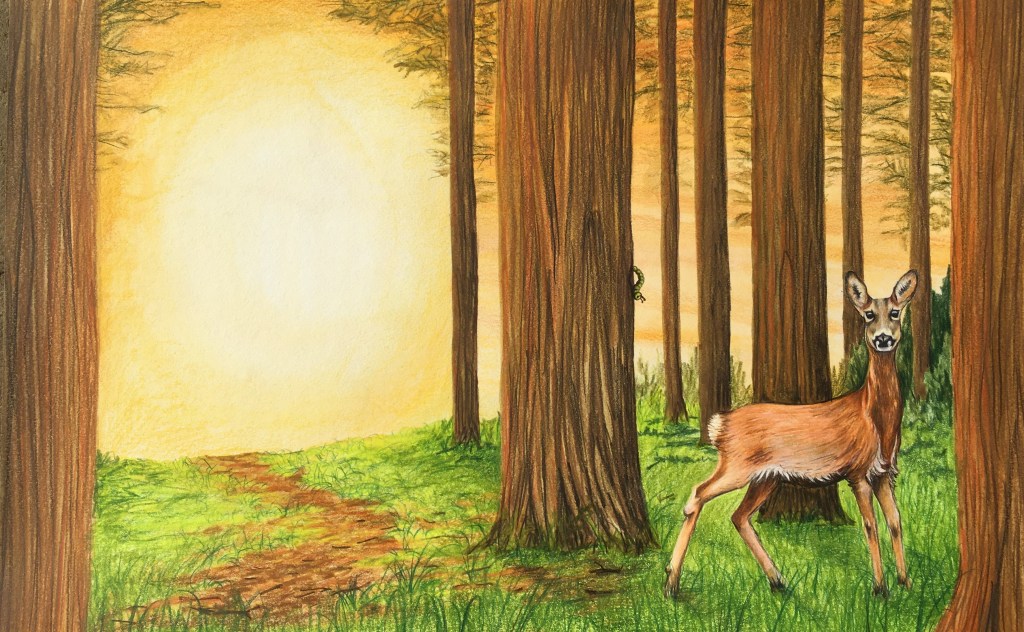
Illustrated by Shelly Oyston

We mustn’t lose our connection with nature once this is over.

As I became accustomed to our new normal, I began to hope we would never completely return to the old normal. The old normal was fume-filled roads packed with angry cars, stressed out guilt-ridden parents unable to find the time they desperately needed and wanted to spend with their children. It was about money and material objects over peace and friendship.

Then the pandemic struck.

The new normal became family walks in the countryside, regularly checking on our elderly parents, homecooked meals and family board games. Chatting for hours on the phone to friends. Children having proper conversations with their parents who properly listened. Adults who had never had time to read a book in years, reading again. Children reading more. Youngsters baking with their parents, going for long bike rides in the fresh air, spending quality time with their pets.

Social media has been flooded with pictures of families together in the countryside, forest paths, unusual trees, beautiful sunsets, wild flowers, rare insects, pretty butterflies…

I know I am not alone in feeling the healing powers of the countryside when I walk through it. The sheer beauty in every direction, the tranquillity. It is sublime.

But we forget easily. Who still uses the hashtag #bekind? We thought we would all change forever after the tragedy of Caroline Flack dying from suicide, but something else always comes along. This time it was Covid-19.

We have to make sure we don’t slide back into our old lives.

We simply must try hard to stop trying so hard! Let’s give ourselves the space to enjoy each other and enjoy life. As we’re returning to full time work we have to ask ourselves some very serious questions. Do we need to work the amount of hours we work? Is a saunter in the countryside more relaxing than flopping on the sofa after a hard day’s graft? Do we need to spend £1,000 on little Mikey’s birthday or can we take him and his friends to a FREE woodland play area? I know which he’d prefer so why do we insist on blowing our money all the time? When we do blow money on expensive gifts for our children, how long do they play with them? How soon are they broken or forgotten or both? Yet memories last forever and a peaceful mindset sets us up for life.

The countryside never stops changing, we have the 4 seasons with all the mini-changes in between. The more experienced you become with the country, the more new things you will see. You’ll begin to recognise the flora and fauna and the clues to which animals have made their homes nearby. Not only will you become experts in animal tracks and burrows and nests, you’ll be come expert poo-identifiers too! You can walk the same track again and again and see something new every single time. There are books to help you identify the different birds, insects, animals and flowers so your children can tick off what they see and search for the more elusive ones. My latest picture book in the “Who Hides Here” series, “Footprints in the Forest” is a very basic introduction to tracking, teaching young children which animal has made the footprints they find when on their family walks through woodland and forests.

There are other fun ways to enjoy the countryside too. Once lockdown has completely ended, the local forestry groups will start putting on events again such as den building, making nettle soup, identifying pond creatures, etcetera. Local to me, Guisborough Forest has an excellent range of events, why not check out your local groups?

I have high hopes for our future. I think we’re going to be happier and healthier. A large part of it is due to our reconnection with nature. We just must not forget and slip back into our old ways.

Blog

Lockdown Culture Shift

Yesterday evening, I mistimed my dog walk and was still out when the clapping started. I therefore walked and clapped (I’m such an excellent multi-tasker). My dog was surprised and excited, but we managed it. As the clapping ended, we were approaching the estate near where I live. And there I happened across the most peculiar thing.

First of all, as we approached, we could hear a general murmur which gradually increased as we got closer. It reminded me of something from the olden days. I couldn’t quite put my finger on it at first, then I recognised it. It was the sound of a large group of happy voices, like you heard when you entered a pub or a party in days gone by. But those days have ended. So what could it really be?

As we rounded the corner, in the glorious evening sunshine, we saw the most beautiful sight: crowds of socially distancing neighbours, still out in their front gardens, holding conversations with each other. The atmosphere was joyous. People were smiling, laughing, nodding and generally being cheerful. There were no cars, so some people were standing in the middle of the road. Children were out in slippers and dressing gowns, an old lady was resting on her walking frame, some people had brought a glass of beer or wine out with them. As I walked through the whole estate, there was no exception. Every single street was buzzing with happiness and social togetherness (albeit at a distance).

Honestly, it made my heart swell. I realised that many of the neighbours, despite living in the same street, would not have met each other before lockdown. At the most a quick nod or wave or unfelt “how-do-you-do?” Now, because people were all out the front at the same time every Thursday, they’d all not only met each other, but got to know each other too. I am certain, many ever-lasting friendships have been made during lockdown.

It got me thinking. Why did we not already know our neighbours? Because we were too busy that’s why. Why were we too busy? Because we were trying to fit in both parents working full time, children, pets, hobbies, clubs…

When women made huge progress to equality in the 1960s, Britain’s workforce almost doubled. This made the cost of houses go up, so both partners needed to work to pay the mortgage and we got stuck in a never-ending hamster wheel.

Now during this unusual period where many parents are not working, I’m seeing fathers out cycling with their sons, mothers out walking with the children, dogs being walked leisurely by the whole family rather than a quick cursory walk after tea, I’m seeing the products of children’s art work posted in windows; social media lays testament to millions of children spending time with their parents baking, DIYing, gardening, playing board games indoors and sports in their garden. I think this will have a huge positive impact on children’s mental health.

Perhaps we should take this downtime to reconfigure our lives. Perhaps, if we wanted, one parent could go part time or stop working altogether. This would give us more time to spend with our children. Automatically we think we can’t afford it, but perhaps if we look hard enough, there could be a way?

With only one person working, only one car is needed: less fuel, tax, test, tyres, insurance… Could we buy cheaper clothes and food? Could we downsize our home? Do the children really benefit from rushing to so many clubs? Could we swap an expensive hobby for a cheaper one such as walking?

Of course, everyone’s circumstances are different, and there are plenty of couples who both want to work full time, that is their prerogative. But for those who want to make a change, perhaps it’s more achievable than you think. And more worth it than you think.

Blog

Home Schooling Made Easy

Having been a childminder of children aged 0-11 for many years, I know I can help you to keep sane with some top-tips!

  1. PLAN. The days I tried to “wing” it were the days I ended up in tears!
  2. Children learn far more quickly with 1:1 so don’t expect to need to put the same hours in as they did at school.
  3. Remain disciplined. If you have rules and routine, they’ll quickly adapt, but if you waver, they will continually push the boundaries – and your patience!
  4. Split the days into different sections so they’re not doing one thing for too long.
  5. Don’t apologise to them for doing school work at home as you’re setting it as a negative – tell them home-schooling is fun. (But not more fun than school, otherwise you’re setting yourself up for a problem returning them after this is over!)

If you’re suffering from a little self-doubt, because you’re not a teacher, so how can you expect to teach your children, please don’t worry. According to the great Swiss philosopher, Jean Piaget, children learn best through play. The only thing new to you is “scaffolding”. This means that the play has to be structured in a way where once they have got good at something, you then create a little challenge to make it harder and let them continue to play to work it out. For example, when they create lots of snowmen out of playdough, ask them if they can make a dog. Let them try and if they find it too difficult, let them watch you making one then they can try again. Try not to step in too soon – they learn lots from failing. (FAIL = First Attempt In Learning.)

Example Day:

  • Teach them to make their own breakfast. This will be great for when they go back to school, as it’s one less job for you. It’s okay if it takes them ages and it’s messy – you have time AND they can help clean up which teaches them why they should be more careful, rather than you just shouting at them to be careful. Talk to them about why they have breakfast, why it is important.
  • Brush their own teeth and wash their own hands and faces (you can do it afterwards if you think it’s not good enough but just tell them it’s an extra clean). Talk to them about healthy teeth and preventing germs.
  • Tidy their own bedroom, and make their beds. Do not be tempted to straighten their beds after they’ve made them. They need to have pride in what they do.
  • Sit at a table to do some work that was sent from school. How long, is age dependent and child dependent – don’t push them for too long. Only help if they ask you for help. When you check their work, remember to always tell them something good about it (even if it’s only that they tried really hard) before telling them how to do the bits they got wrong.
  • Celebrate their hard work by some free play in the garden. If it’s too cold wrap them up. If it’s too wet, put their wellies on and hoods up or umbrella, if it’s too hot, lotion them and create a shady area. The weather will kindly add variety to what they’re doing. Don’t be garden proud this summer. Everything can be fixed.
  • They must wash their hands as soon as they’re in, then they can have a little snack which they can assemble. You just set the ingredients out. For example, some crackers, some butter that’s been out of the fridge for 10 minutes, some slices of cheese. Yes, it might take them ages to spread the butter, but they’ll get better and better at it with practice.
  • Now it’s time for a little more school work (different subject from earlier)
  • Lunch time is another lesson. They can help you to set the table, and make their lunch, even if it’s just stirring the soup with you and putting bread buns on the plates. Talk to them about what they’re eating, what about it is healthy and why and what is a treat.
  • Time to play out again.
  • Story time: Read a story (or chapter). Older children can read to themselves or each other. To engage children who have lost interest in stories, ask them to guess what is going to happen next, or what do they think they know about a character that they haven’t been explicitly told. They’ll be surprised how much is implied. They need to become reading detectives, then they’ll fall in love with reading. With reluctant/struggling readers, take turns per page or per paragraph – reading is exhausting until they become fluent.
  • Constructive play. This can be playdough, creating pictures, lego, sticklebricks, board games, etcetera. It is important you take part with them, or it quickly goes wrong. It’s a great time for family bonding and conversation.
  • To finish the day, they can phone an elderly relative or any friend or family who is self-isolating and tell them all about their wonderful day. Alternatively, they could write a letter or homemade card to send instead.
  • Now all they have to do is tidy away their work and anything they played with. Plus, they can sort the washing for you or dust and vacuum one room.

Extra ideas:

  • An important topic at Primary age is learning about the world around them. When they’re out in the garden, ask them to search for signs of life: little shoots coming up – will it be a flower or a weed? Who made those footprints? (Check out my book “Who Hides Here? Footprints in the Garden”) Talk about the seasons and why they’re important for plants to grow and which animals come out when.
  • They can do fun exercises in the house or in the garden – when I was a gymnastics coach, we used to act out well known fairy tales and fables, for example Jack and the Beanstalk we would do giant steps for the giant and run away for Jack. We would pretend to be the goose, we would lie down and stretch ourselves as big as possible when the harp sent the giant to sleep, etcetera.
  • Watch a short film then draw a story-board of what happened. Make up a new title. Design a DVD cover. Write a review/give it stars.
  • On-line educational games.
  • Sorting photographs and talking about past adventures, relatives, when you were young, when they were younger, etcetera.